
Brush Removed Down to the Root Line
Brush cutting in Baird for vacant lots and rural acreage where years of unchecked growth cannot be handled by mowing alone
Vacant lots in new developments and rural acreage across the Baird area frequently carry years of accumulated brush growth, and a mower passes over the problem rather than solving it. Massey Land Management approaches brush cutting with a grapple and grubber combination so that material is pulled out and cleared rather than knocked flat and left to regrow from intact root systems. The distinction matters because vegetation left with its roots in the ground re-establishes quickly, and the lot ends up requiring the same work again within a season or two.
The crew runs a John Deere 325G tracked skid steer equipped with high-flow hydraulics, which drives the grapple with enough force to seize and pull brush and debris rather than pushing it around. The grapple gathers material in controlled lifts, and the grubber pulls root systems from the soil so the cleared ground stays clear. Work is done in systematic passes across the lot, leaving the ground surface clear of cut material rather than scattered with it, which means the finished lot is usable immediately rather than requiring a second cleanup pass.
Set up a site walk with Massey Land Management to assess the brush load, identify any obstacles, and determine the equipment passes needed to clear the lot fully.
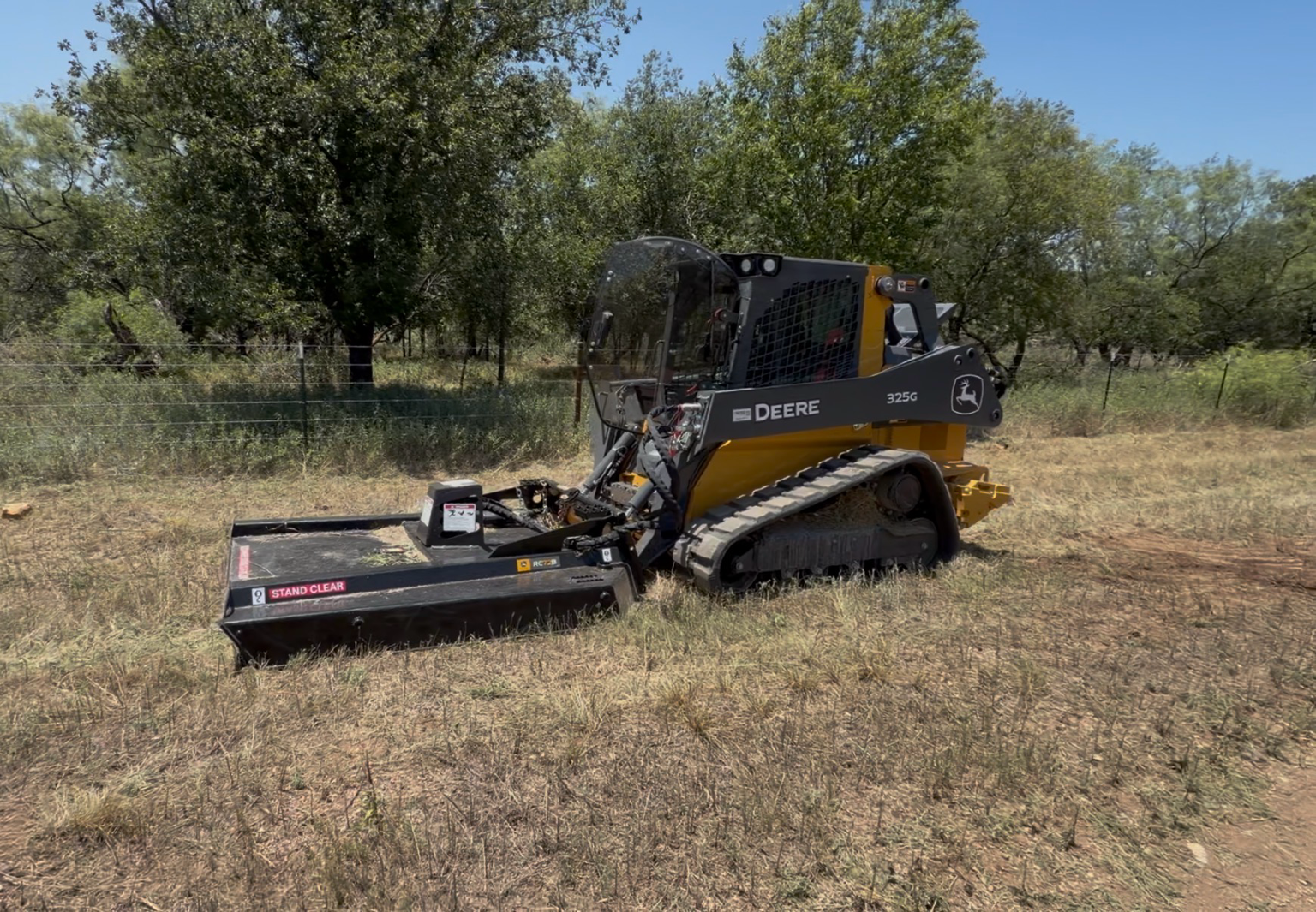
How Grapple and Grubber Work Together on Heavy Brush
The high-flow hydraulic system on the 325G is what separates effective brush removal from surface-level cutting. Standard-flow machines run grapples at reduced force, which limits the operator's ability to extract rooted brush rather than simply compressing it. High-flow hydraulics allow the grapple to close with enough pressure to lift and remove dense brush clumps, including the base and root crown, in a single motion rather than requiring multiple passes to break the material loose.
After clearing, you will notice the lot surface is open ground rather than a mat of cut stems and tangled debris. Material is removed from the site rather than redistributed across it, so there is no windrow of brush piled along the lot edge unless that is specifically requested. The grubbed soil holds fewer viable root fragments, which slows reestablishment of the same brush species that occupied the lot before clearing.
Because the owners operate the equipment themselves, they make real-time decisions about which areas require grubbing passes versus grapple-only removal based on what they observe during the clearing work. Heavily rooted species get grubbed; lighter brush that has not established deep root systems is grappled and removed. That decision process during the job produces a more consistent finish than a single-attachment approach applied uniformly across varying brush conditions.
Answers About How the Brush Cutting Work Is Done
These questions address the process and what property owners can expect during and after brush cutting on rural lots and acreage properties.
Why does a grapple outperform a brush cutter attachment for heavy overgrowth?
A brush cutter shreds material in place and leaves the cut debris and root systems in the ground. A grapple physically removes what it grabs, so the lot is cleared of mass rather than having its surface reduced without addressing the root layer below it.
How does the crew sequence work across a lot with mixed brush density?
The crew works in passes, typically starting with the heaviest brush concentrations where the grapple is doing the most extraction work, then moving to lighter areas. This prevents cleared material from being re-scattered across already-finished ground as the machine repositions.
What root depth does grubbing address?
The grubber works at a depth suited to pulling the root crown and primary lateral roots of the brush species common to the area, which removes the plant's ability to resprout from the base. Deeper tap roots on mature species may remain, but removing the crown interrupts regrowth more effectively than cutting at surface level.
How does tracked equipment affect lot conditions on rural acreage in the Baird area?
Tracked machines distribute ground pressure across a wider footprint than wheeled equipment, which reduces compaction in the areas being worked and avoids leaving deep tire ruts across soft or uneven ground typical of rural parcels that have not been disturbed in years.
What does the cleared lot look like when the work is finished?
The finished lot is open ground with the brush load removed and cut material cleared from the surface. There will be disturbed soil in areas where the grubber worked through root systems, but the lot is accessible and usable without a secondary cleanup step.
Massey Land Management also performs brush cutting in Clyde, Cross Plains, Putnam, Cisco, and Abilene. To get a clear picture of what the clearing work involves for your specific lot, describe the approximate acreage and brush density when you contact Massey Land Management to arrange an on-site evaluation.