
Roots Out, Not Just Stems Cut
Mesquite removal in Baird for pasture and rural parcels where cut-only work leaves regrowth by the following season
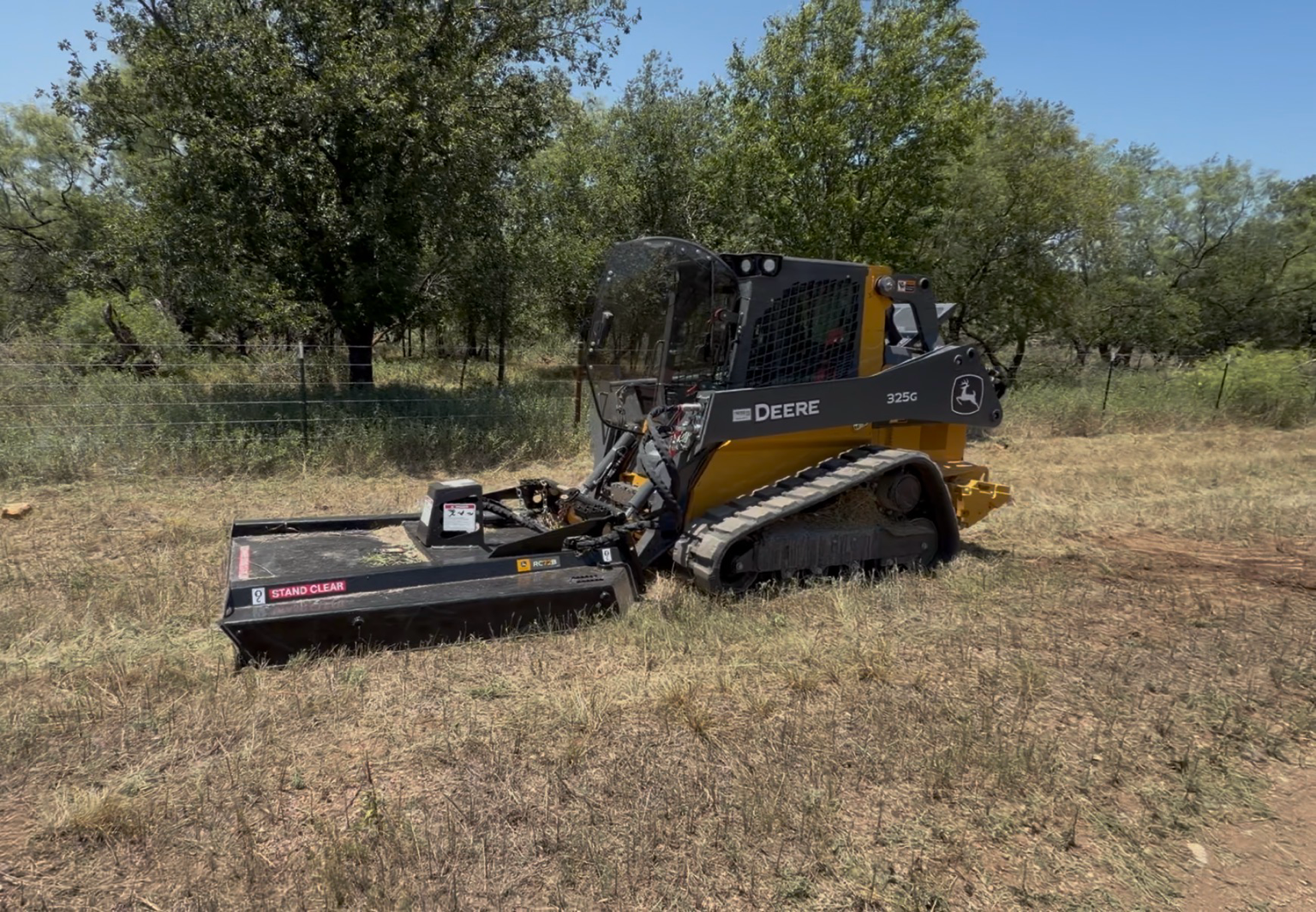
A mesquite tree cut at the stem will resprout from the root crown within one growing season—sometimes faster on pasture that has been cleared once before, because the root system is already established and ready to push again. That is the core problem with cut-only mesquite work, and it is why Massey Land Management uses a grubber on a 2026 John Deere 325G tracked skid steer with high-flow hydraulics: the machine pulls each tree and its root mass out of the ground rather than severing it at grade. The result on open pasture and rural parcels around Baird is cleared ground that does not send up a new flush of shoots the following spring.
Much of the open ground in the Big Country is mature pasture where mesquite has crept back in over years or decades, and landowners often discover that previous clearing work—done with a cutter or mulcher—has left root crowns fully intact and ready to regrow. The grubber attachment on the 325G is specifically matched to this problem: high-flow hydraulics give the machine enough force to extract roots rather than just tear the above-ground portion free, and the tracked undercarriage keeps the skid steer stable on the uneven ground typical of older pasture parcels.
Arrange a site visit with Massey Land Management to assess the density and extent of mesquite across your parcel before the work is quoted.
Why Root Extraction Changes the Result
The grubber works across the parcel in sequence, pulling each mesquite tree and extracting the root mass before moving to the next. Once a tree is pulled, the crew either stacks and hauls the debris off site or piles it for burning, depending on what the landowner wants done with the material. Trees are removed in a deliberate sequence so the ground is left rough-graded as the work progresses, which means the finished parcel is ready for whatever follows—whether that is reseeding, grazing, or further development—without a second grading pass.
After grubbing is complete, what the landowner sees is open ground with root crowns removed rather than severed stumps, and no immediate regrowth pushing up from below. The surface is rough-graded by the tracked machine's movement across the parcel, so there are no large windrows of displaced soil and no standing debris piles unless burning is the plan. Pasture that has been grubbed correctly can be reseeded or put back to use without waiting out another clearing cycle.
The John Deere 325G is owner-operated equipment—Massey Land Management runs its own machine on every mesquite removal job and does not subcontract the skid steer work. The tracked undercarriage matters on pasture with ruts, low spots, or uneven terrain because it maintains traction and machine control where a wheeled skid steer would lose stability, which directly affects how thoroughly the grubber can seat and pull each root mass.
Questions About Mesquite Removal Work
These questions address how mesquite grubbing is actually performed and what landowners should understand before the work begins.
Why does grubbing produce a different result than cutting or mulching mesquite?
Cutting and mulching remove the above-ground portion but leave the root crown in place, which regenerates; grubbing with a dedicated attachment pulls the root mass out of the ground, so the regrowth cycle does not restart from the same plant.
How does the crew sequence work across a large parcel?
Trees are pulled in order across the parcel rather than selectively, so the ground is cleared systematically and the rough-grading effect of the tracked machine's movement leaves the surface consistent rather than patchy.
What happens to the debris once the mesquite is pulled?
The landowner decides before work begins whether the material is stacked and hauled off site or piled on the parcel for burning—both options are accommodated, and that decision affects how the crew stages the removal.
How does the John Deere 325G's tracked undercarriage affect the quality of the grubbing work on pasture ground in Baird?
Tracks distribute the machine's weight across uneven pasture without the wheel spin or tipping risk a wheeled skid steer faces, which means the operator can apply full hydraulic force to seat the grubber and extract roots without the machine losing its footing mid-pull.
What should a landowner confirm before mesquite removal begins on a parcel with mixed brush species?
The crew works through mesquite as the primary target, so the landowner should identify any areas where other species or specific plants are to be avoided before the work is quoted and sequenced.
Massey Land Management also removes mesquite in Clyde, Cross Plains, Putnam, Cisco, and Abilene. Call (325) 315-1538 to describe your parcel and schedule a site review.