
Cleared Ground Ready for What Comes Next
Property Cleanup in Baird for overgrown lots, accumulated brush, and debris that blocks development or sale
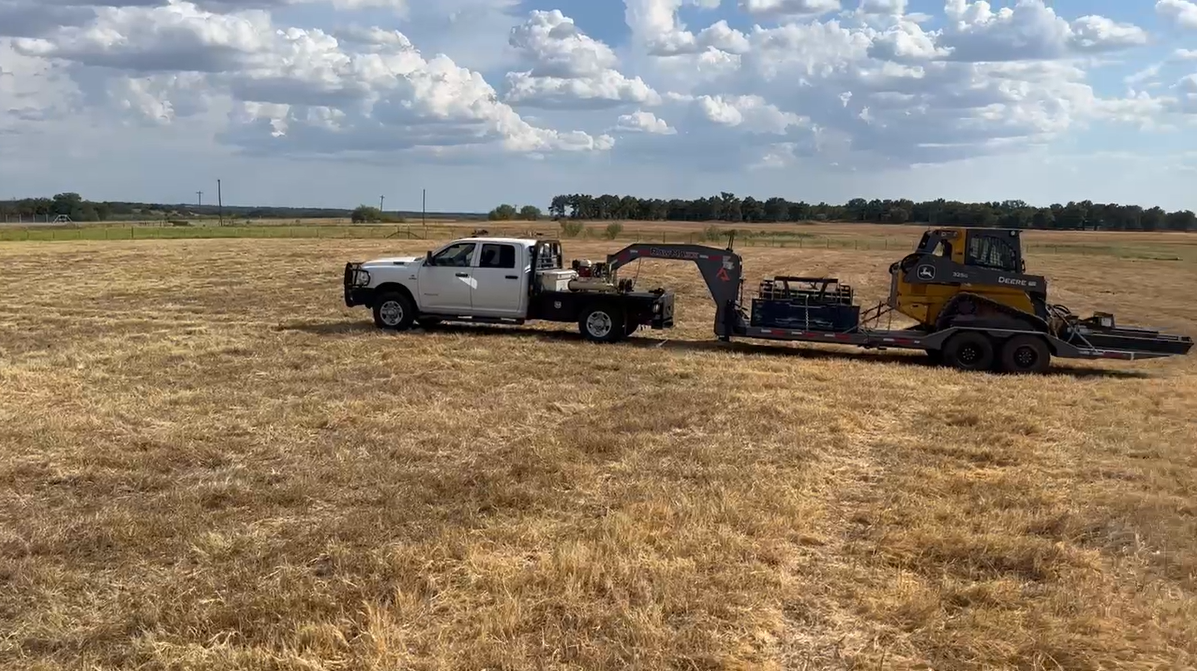
Vacant parcels and unsold lots in developing areas accumulate brush, downed limbs, and tangled root systems over time—often to the point where neither a buyer nor a contractor can properly assess the ground beneath it all. Massey Land Management performs property cleanup using an owner-operated John Deere 325G tracked skid steer fitted with a grapple and grubber, giving the crew the right tools to remove surface debris and the root mass beneath it in a single mobilization. If you're working with a parcel that has sat unused long enough for brush and stumps to establish, that combination of attachments is what separates a genuine cleanup from mowing over the surface of a problem.
The work follows a clear sequence: the grapple handles surface brush, debris piles, and cut material, pulling it away from the ground in manageable loads. The grubber then works into the soil to extract roots and stumps rather than leaving them to regrow or interfere with future grading. Everything removed is hauled off the site, so what remains is open, workable ground—not debris staged in corners for someone else to deal with later. For lots that need to pass inspection before a sale or meet a building department's clearing standard before a permit is issued, that hauled-off result matters.
Request an on-site assessment so the scope of clearing can be evaluated against the actual condition of the parcel.
What Proper Property Cleanup Actually Requires
Brush removal and root extraction are two separate problems, and skipping the second one is where cleanup jobs fall short. Surface material can be cleared and hauled without ever touching the root systems that remain in the ground—still viable, still capable of sending up new growth, and still capable of interfering with any grading, foundation work, or fencing that comes afterward. The grubber attachment on Massey Land Management's tracked skid steer works beneath the surface to pull those root systems out rather than cutting or grinding above grade and leaving the base intact.
Once the work is complete, you'll be looking at bare, accessible ground with no brush piles, no stump crowns, and no root material mounded along the edges. That's the condition a surveyor, grading contractor, or prospective buyer needs to properly evaluate and work with the parcel. The tracked undercarriage on a 325G is also suited to properties where wheeled equipment would rut or bog—a practical consideration on parcels that haven't seen maintenance equipment in years and may have soft or uneven terrain beneath the overgrowth.
The scope of a cleanup job shifts based on what's on the ground: heavy brush with established root systems takes different equipment time than a lot with scattered debris and light regrowth. Both attachment functions—grapple and grubber—are available in the same pass, so the crew can shift between surface clearing and root extraction without bringing a second piece of equipment to the site.
Answers About How the Work Is Done
Property owners often have specific questions about what the clearing process involves and what the ground looks like when the crew leaves. The following covers the most common ones about how the work is actually performed.
What does the grubber attachment do that a brush cutter does not?
The grubber pulls root systems out of the ground rather than cutting brush at or near the surface, which means stumps and root crowns are physically removed rather than left in place to regrow or obstruct future grading work.
How does a tracked skid steer handle properties with uneven or soft ground?
The tracked undercarriage distributes machine weight across a wider footprint than wheeled equipment, allowing it to operate on parcels where soft or irregular terrain would cause a wheeled machine to rut or lose traction.
What happens to the brush and debris after it is cut and grabbed?
All cleared material is loaded and hauled off the property, leaving the site free of debris piles rather than staged along the fence line or burned in place.
Why does root removal matter for a lot that is going to be graded before building?
Roots and stumps left in the ground can shift, compress unevenly, or interfere with the blade when grading equipment passes over the area, creating low spots or obstruction points that delay the grading process.
How does the condition of a vacant parcel in Baird typically affect the clearing approach?
Lots that have sat unsold or unused for several years in this area commonly develop layered brush growth with established root systems beneath, which means both grapple work and grubbing are usually needed rather than surface clearing alone.
Massey Land Management also performs property cleanup in Clyde, Cross Plains, Putnam, Cisco, and Abilene. To get a clear picture of what the work involves on your specific parcel, schedule a walkthrough with the owners before committing to a scope of work.