
Raw Ground Graded to a Stable Trailer Site
RV pad preparation in Baird for acreage where ungraded ground was never leveled for a trailer and the unit needs a stable, draining surface
Families and hunters who park RVs on rural acreage outside town often place a unit on ground that was never graded for it—the result is a pad that tilts the unit off level, collects water beneath it, and requires the owner to re-level with blocks every visit. Massey Land Management handles RV pad preparation as a complete site sequence, from clearing brush and grubbing roots from the footprint to spreading material and rough grading the surface level, with the shape of the pad designed to shed water away from the unit rather than hold it underneath. The crew uses a 2026 John Deere 325G tracked skid steer with interchangeable grubber, grapple, and general-purpose bucket attachments, so clearing and grading are handled by one company with one machine.
The process starts with the footprint: brush is cleared, and the grubber pulls roots and root crowns from the pad area so there is no organic material left beneath the surface to decompose and create soft spots under the unit's weight. Once the footprint is clean, material is spread and graded level across the pad, with the surface shaped so drainage runs toward the access lane rather than sitting beneath the RV. The owner confirms the pad size, turning area, and material type before the work is quoted, since all three affect how the grading is sequenced and how much material is required.
To walk through the site conditions and confirm the pad dimensions before a quote, call Massey Land Management at (325) 315-1538.
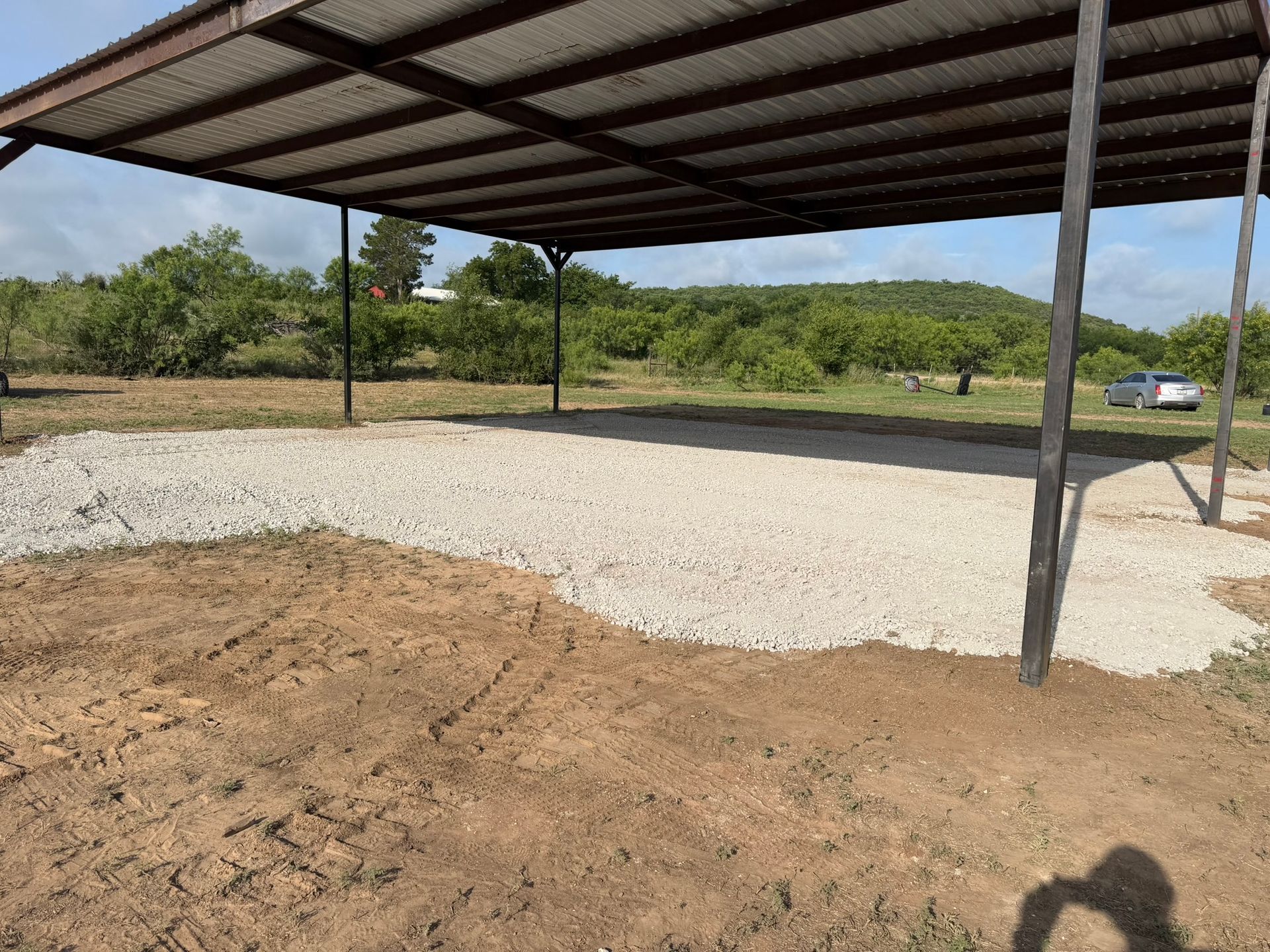
How RV Pad Prep Addresses the Ground Condition
The grubber does work that a bucket alone cannot: it extracts root masses from the pad footprint rather than burying them under fill material, which matters because organic material left under a compacted surface decomposes, collapses, and creates soft spots that tilt the unit after the first season. The grapple then clears any remaining brush or debris from the footprint before the bucket spreads and grades the pad surface. Running all three attachments on the same 325G means the crew does not need to move between machines or coordinate separate subcontractors for the clearing and grading phases.
After the pad is finished, the RV sits on a surface that is level across its footprint, with the grade sloping away from the unit on all sides. Owners who previously used stacks of boards or leveling blocks to compensate for uneven ground will find the unit sits close to level from the first placement without manual correction. On acreage parcels in areas like Cross Plains and Albany where rural ground has significant grade variation across a small footprint, shaping the pad surface correctly during the grading pass is what determines whether the unit stays stable under load or shifts as the surface settles.
The 325G is owner-operated on every RV pad job—Massey Land Management does not subcontract the machine work, and the crew that does the clearing is the same crew that does the final grading pass. Landowners should also confirm the turning area before work begins: a pad that does not include enough room to maneuver a truck and trailer into position requires the owner to back the unit a long distance on ungraded ground, which defeats the purpose of a prepared site.
What Property Owners Ask Before Pad Prep Begins
These questions address how RV pad site work is performed and what the landowner needs to confirm before the crew arrives.
Why does the root grubbing step matter before gravel is spread on an RV pad?
Roots and root crowns left under fill material decompose over time and create voids that allow the surface to sink unevenly; the grubber pulls those masses out of the footprint so the material is spread over stable, consistent sub-grade rather than over organic material that will shift.
How is the pad surface shaped to prevent water from collecting beneath the RV?
The finished grade is sloped away from the unit's footprint toward the access lane, so surface water runs off rather than ponding under the unit's belly and frame—the direction of that slope is set during the final grading pass with the general-purpose bucket.
What should a landowner confirm before an RV pad is quoted on rural acreage near Baird?
Pad size, turning area dimensions, and the material type are the three inputs the crew needs before work is scoped; the turning area is often overlooked, but a site that does not allow a truck and trailer to maneuver in requires the owner to back the rig in from a long distance on ungraded ground.
How does the sequence of clearing and grading affect the finished pad?
Clearing and grubbing the footprint first ensures that all organic material and root mass is removed before any fill is placed; grading over uncleared ground buries material that will later decompose and destabilize the surface, so the sequence is not interchangeable.
What is the difference between a rough-graded gravel pad and a concrete pad for an RV site on rural acreage?
A rough-graded gravel pad can be placed and leveled in a single site visit using a skid steer and does not require a separate concrete pour or cure time; a concrete pad provides a harder, more permanent surface but requires forming, pouring, and finishing by a separate trade, which adds mobilization and lead time to the project.
Massey Land Management also prepares RV pads in Clyde, Cross Plains, Putnam, Cisco, and Abilene. Call (325) 315-1538 to describe the site and confirm pad dimensions before the work is quoted.