
Rutted Drives Graded Back to a Usable Surface
Driveway repair in Baird for rural and acreage properties where long dirt or gravel drives have washed out, rutted, or lost their grade
Long dirt and gravel driveways on rural properties and acreage near Baird do not fail all at once. They develop ruts in low spots where water concentrates, lose their crown so water sheets across the surface instead of draining to the sides, and eventually reach a point where patching individual sections no longer holds because the grade itself is wrong. Massey Land Management repairs those drives by scraping out the failed material, bringing in fill, and rough grading the surface so it drains and holds up rather than continuing to rut in the same locations.
The crew uses a John Deere 325G tracked skid steer with a general-purpose bucket, which handles the full repair sequence: scraping loose and displaced material from existing ruts, moving fill into the low areas, spreading it in even layers across the drive width, and rough grading the finished surface with enough crown or cross slope to direct water toward the shoulders. The owners operate the equipment themselves, which means the grading decisions—how much material to pull from high spots, how deep to build up low spots, where the crown line runs—are made by the people doing the work rather than communicated through a chain.
Arrange an on-site review with Massey Land Management to assess the drive length, identify where the grade has failed, and confirm what fill material is needed before scheduling repair work.
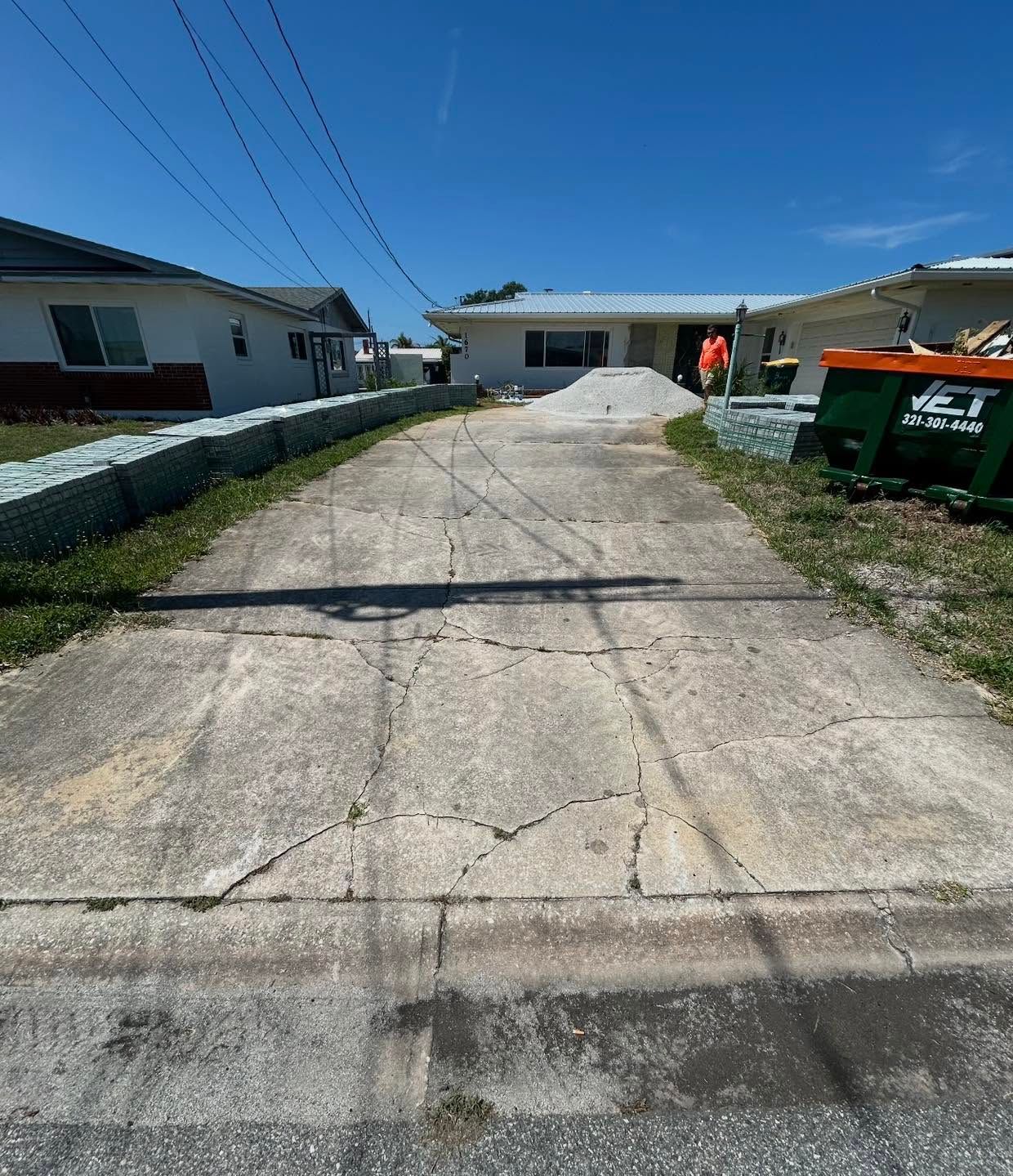
What Driveway Repair Actually Accomplishes
A driveway repair that only fills visible ruts without addressing the surface grade reproduces the same failure within a short time. Water follows the path the grade creates for it, and if that grade still directs water toward the center of the drive or into the same low areas that already failed, the fill material washes out or compresses unevenly again. The repair process starts by scraping out loose and degraded material to get below the failed layer, then builds the surface back up in layers using the general-purpose bucket so each layer can be spread and seated before the next is added.
Once the repair is finished, you will notice the drive surface is consistent in elevation without the pronounced dips and soft spots that caused the ruts. Water moves off the surface toward the sides during rain rather than pooling in the low points and working into the base material. Vehicles can travel the full length of the drive without bottoming out or pulling to one side through soft areas.
Rural drives on acreage properties near Clyde and Anson often require material to be brought in rather than redistributed from the existing drive surface, because repeated grading without adding fill eventually removes more material than is present to work with. The fill type—whether base rock, road base, or native material—affects how the surface holds up, and that selection is confirmed before the work begins based on the drive's use and the existing surface condition.
Questions Before Starting Driveway Repair Work
The questions below address how driveway repair is approached on rural and acreage properties and what the process involves from scraping to final grade.
What is the first step in repairing a badly rutted gravel or dirt drive?
The crew starts by scraping out the loose and displaced material in the rut zones to expose the more stable base layer beneath. Filling directly over soft or loose material embeds the fill in an unstable layer, which causes it to displace again under load rather than staying in place.
How is fill distributed evenly across a drive surface with a skid steer bucket?
The general-purpose bucket allows the operator to meter material in controlled dumps across the width of the drive and then spread it with the back of the bucket. Working in shorter sections across the drive width produces a more even layer than dumping in large piles and spreading, which tends to leave high and low points across the width.
How does the crew establish a crown or cross slope during rough grading?
The operator makes final grading passes with the bucket at an angle to the drive centerline, tilting the finished surface slightly toward one or both shoulders. The angle and direction of the crown are determined by the drainage pattern of the surrounding ground so water is directed away from the drive base rather than toward it.
Why do rural drives on acreage near Baird often need fill brought in rather than just regraded?
Long drives on rural parcels in this area are frequently graded repeatedly over years without material being added, which removes more aggregate than it redistributes. At that point the surface is below the level it needs to be to drain correctly, and regrading existing material cannot restore elevation without new fill.
What maintenance step extends the repair after the grading work is done?
Keeping the shoulders clear of debris and vegetation prevents the drainage path from being blocked after the work is complete. When water cannot exit the drive surface at the shoulder, it backs up and re-enters the base material, which restarts the rutting cycle regardless of how well the surface was graded.
Massey Land Management also repairs driveways in Clyde, Cross Plains, Putnam, Cisco, and Abilene. To confirm the scope of repair needed on your drive, contact Massey Land Management and describe the drive length and the areas where the surface has failed most significantly.