
Ground Cleared and Graded Before the Builder Arrives
Building pads in Baird for acreage and new lots where open ground must be cleared, built up, and graded before a shop or home can go in
Acreage lots and newly platted parcels in the Baird area frequently require ground preparation that goes beyond surface clearing before a structure can be placed. Brush is growing on the footprint, root systems are below grade, and the natural elevation of the ground may not match what the structure requires. Massey Land Management prepares building pads by clearing and grubbing the footprint, bringing in and spreading material to build the pad to the planned elevation, and rough grading the site so it is ready for the next trade when the equipment leaves.
The owners operate a 2026 John Deere 325G tracked skid steer with high-flow hydraulics and a general-purpose bucket, handling every step of the pad prep themselves. The sequence runs from clearing brush and grubbing root systems—which removes the organic material that would compress unevenly under a foundation or slab—through spreading and rough grading material to the planned footprint dimensions. Because the owners run the machine rather than crew members, the grading decisions made on each pass reflect a direct understanding of how the finished pad needs to sit relative to the planned structure and drainage direction.
Request a site visit from Massey Land Management to walk the planned footprint, assess existing ground conditions, and confirm material and grading requirements before the work is scheduled.
The Difference Between Cleared Ground and a Ready Pad
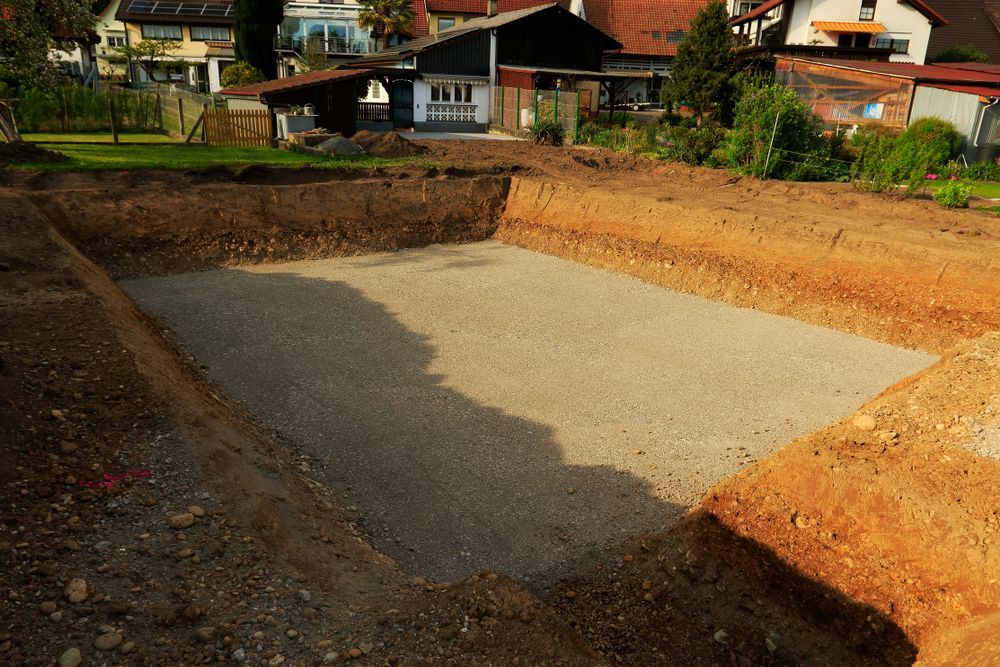
Clearing brush from a building footprint and preparing a building pad are not the same operation. A cleared footprint has vegetation removed at the surface; a prepared pad has the organic layer grubbed out, fill material spread and seated to the correct elevation, and the surface rough graded to the planned footprint with appropriate drainage slope built into the surrounding grade. The distinction matters because builders and concrete contractors need a pad that is dimensionally correct and stable, not simply a cleared area of variable elevation and uncertain bearing capacity.
When the pad prep is finished, Massey Land Management leaves the site graded to the planned footprint, with the surface consistent in elevation and edges graded to direct water away from the building area. The next trade—whether a concrete crew, a metal building contractor, or a framing crew—arrives at a site where their work can begin without additional earthwork holding up their schedule.
Acreage lots near North Abilene and Albany that are being developed for shops, barns, or rural homes often need elevation brought up before a pad can be graded, because the natural ground is below the level needed for the structure to sit above the surrounding drainage pattern. The amount of fill required is confirmed before work begins, and the planned footprint dimensions are established on-site so material is not spread beyond the area the builder needs graded. Any existing structures, utility lines, or access constraints on the property are identified during the initial site visit and factored into the equipment approach before mobilization.
What Property Owners Ask About Building Pad Preparation
These questions address how building pad prep is sequenced and what the finished site should look like before the first trade arrives to begin construction work.
Why does grubbing matter on a building pad footprint before material is spread?
Root systems and organic material compress at a different rate than mineral soil or imported fill. Leaving them in place under a pad creates soft zones that settle unevenly after the structure is in place, which can affect the slab, foundation, or floor system above. Grubbing removes that compressible layer before fill is placed on top of it.
How is the planned footprint established on-site before grading begins?
The crew works from the dimensions provided by the property owner or builder, staking or referencing the corners of the planned structure to confirm the graded area matches the actual footprint before material is spread. Grading beyond the footprint wastes fill material and creates grade transitions that may interfere with drainage or future site work.
What does rough grade mean in the context of building pad prep, and is it sufficient for a concrete crew?
Rough grade means the pad surface is brought to elevation and leveled to within the tolerance a concrete contractor needs to begin their work. It is not finish grade, but it is close enough that the concrete crew can set forms and place their material without additional earthwork.
How does high-flow hydraulics on the skid steer affect the grubbing phase of pad prep?
High-flow hydraulics deliver greater force to the grubber attachment, which allows it to extract larger root systems and deeper root crowns in fewer passes. Standard-flow machines often require the grubber to make multiple passes over the same area to fully extract root systems that a high-flow machine pulls in a single cut.
What should a property owner confirm with Massey Land Management before the pad prep is scheduled on rural acreage near Baird?
The footprint dimensions, planned elevation relative to the existing ground, fill material type, and any site access constraints should all be confirmed before the equipment is mobilized. These details determine how much material is needed, how many passes the grading will require, and whether any site conditions affect the approach.
Massey Land Management also prepares building pads in Clyde, Cross Plains, Putnam, Cisco, and Abilene. To move forward with your building pad project, contact Massey Land Management with your planned footprint dimensions and site location so the prep scope can be confirmed before scheduling.